Project Details
Home/Project Details
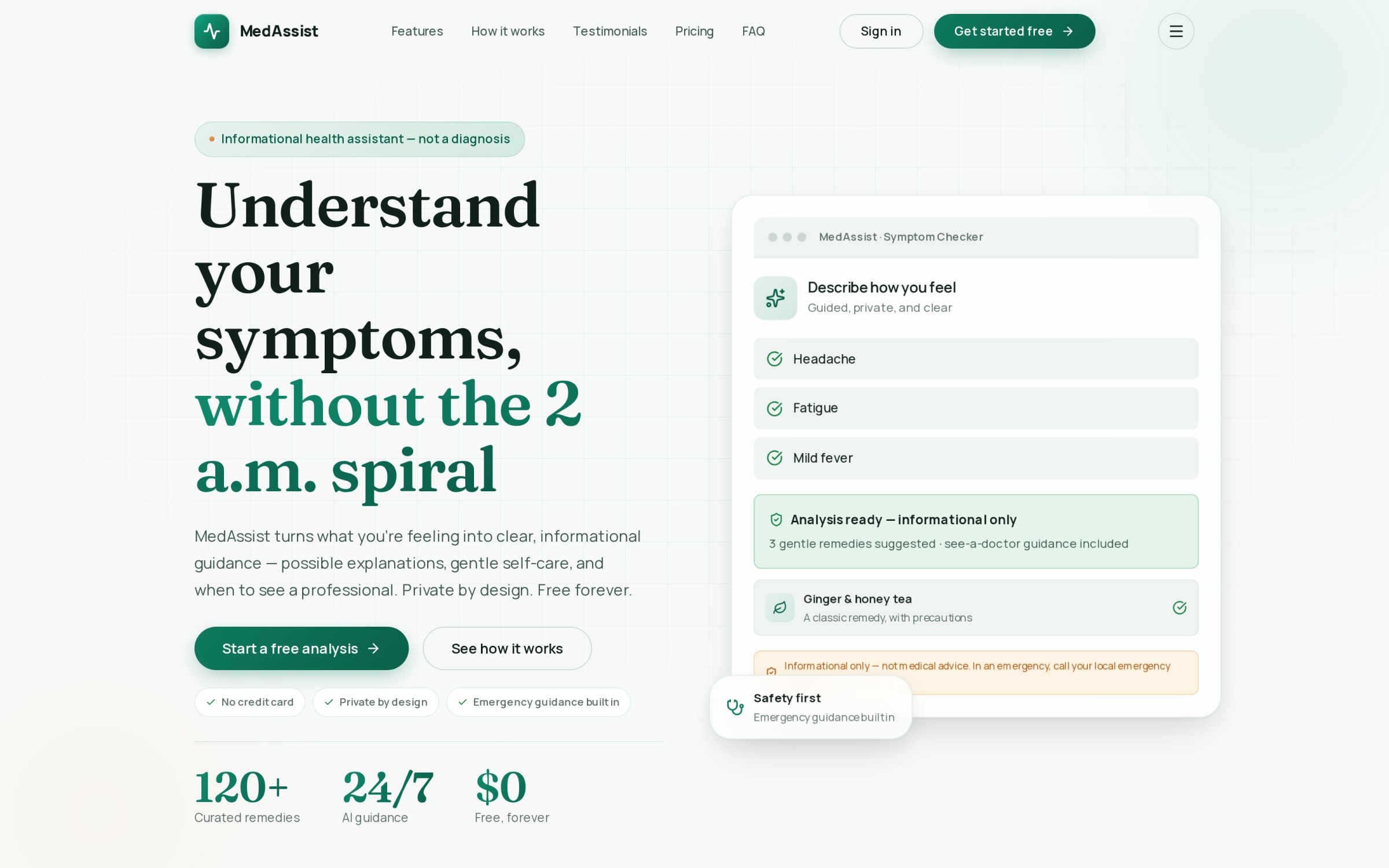
MedAssist
Project description
A health assistant designed to refuse
The Challenge
Most people looking up a symptom are not trying to diagnose themselves; they are trying to decide whether this is a wait-and-see or a go-now. Search results answer neither question — they return a list of the worst things it could be, in an order shaped by advertising rather than urgency.
The single most important behaviour is knowing when to stop. A health assistant that answers every question is a liability with a friendly interface, so the emergency path has to be the fastest thing in the product, and the assistant has to be willing to say "I cannot tell you this" without being manoeuvred out of it.
The Solution
A guided flow rather than an open chat: structured questions that narrow to a clear next step, with a remedies library for the cases that are genuinely self-care, and an escalation path that is reachable from every screen and takes precedence over everything else on the page. The AI conversation exists, but it sits inside the flow rather than replacing it, so it is never the only thing standing between a person and an answer.
Skills and deliverables
Features delivered
The hard part
Designing a refusal that still feels like help. "See a doctor" is the correct answer often enough to be worthless if presented as a dead end, so the interface has to explain what the assistant could and could not assess, and hand over something concrete — what to watch for, what to tell the clinician — rather than an apology.
The Impact
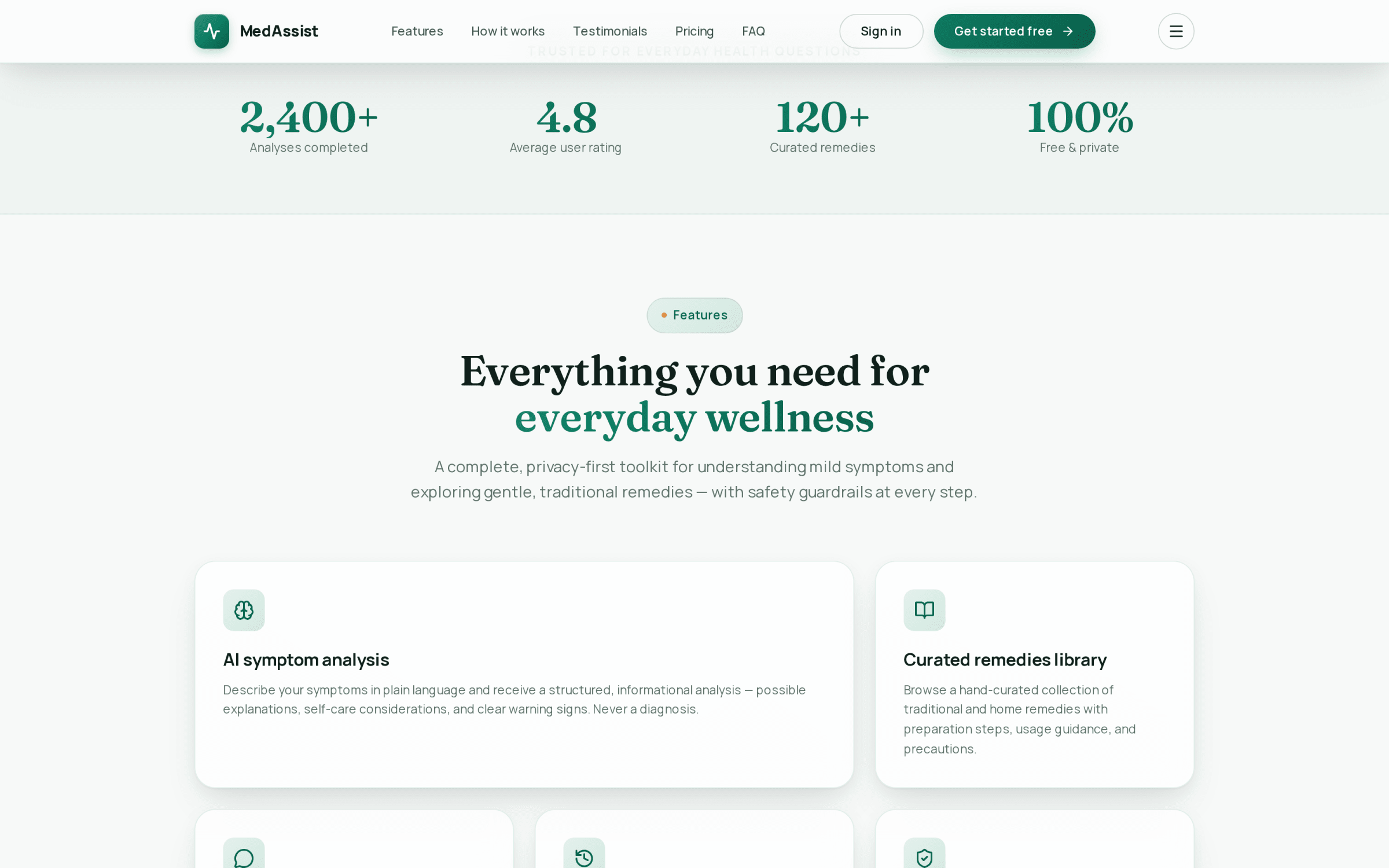
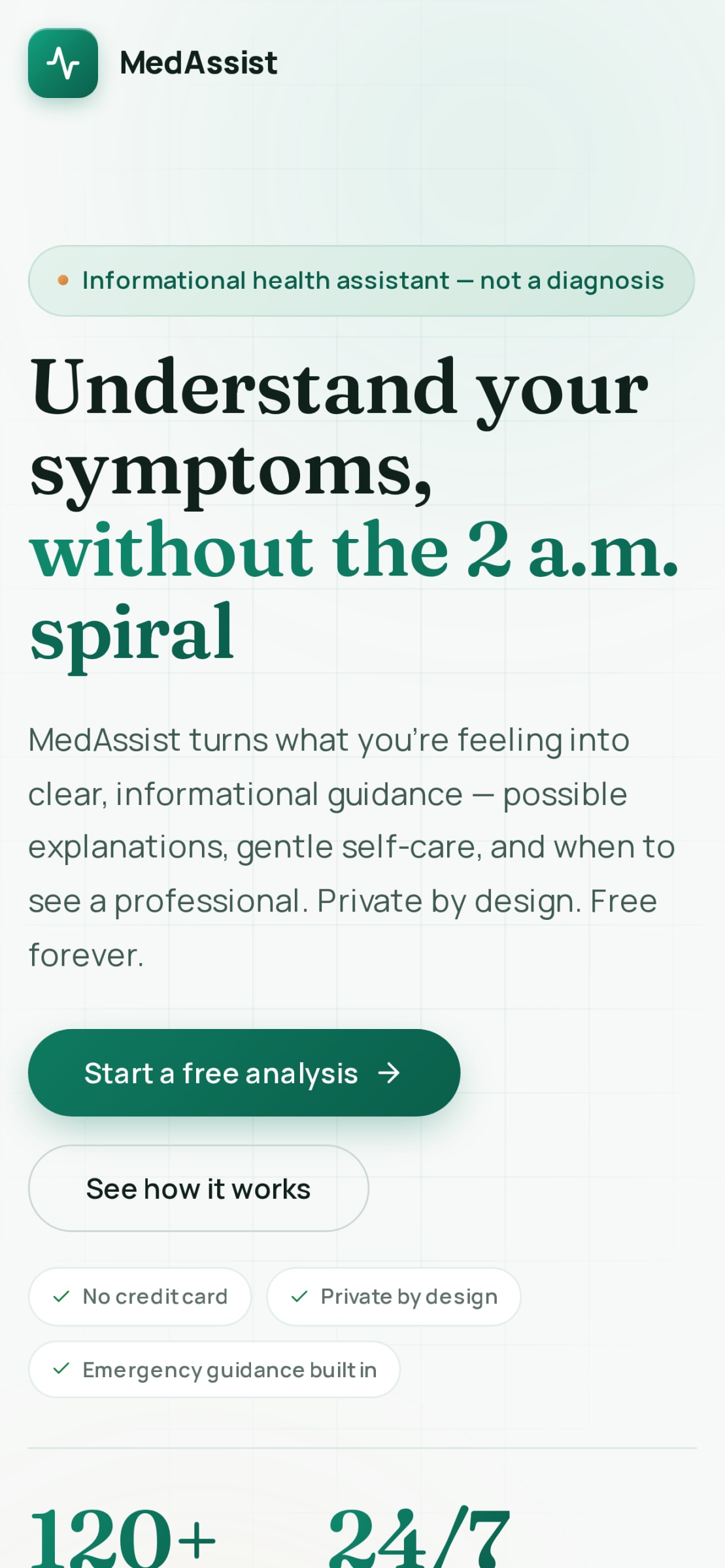
A live, installable web application with symptom guidance, an AI conversation, an emergency escalation path and a remedies library, deliberately scoped as health *information* and named that way throughout.